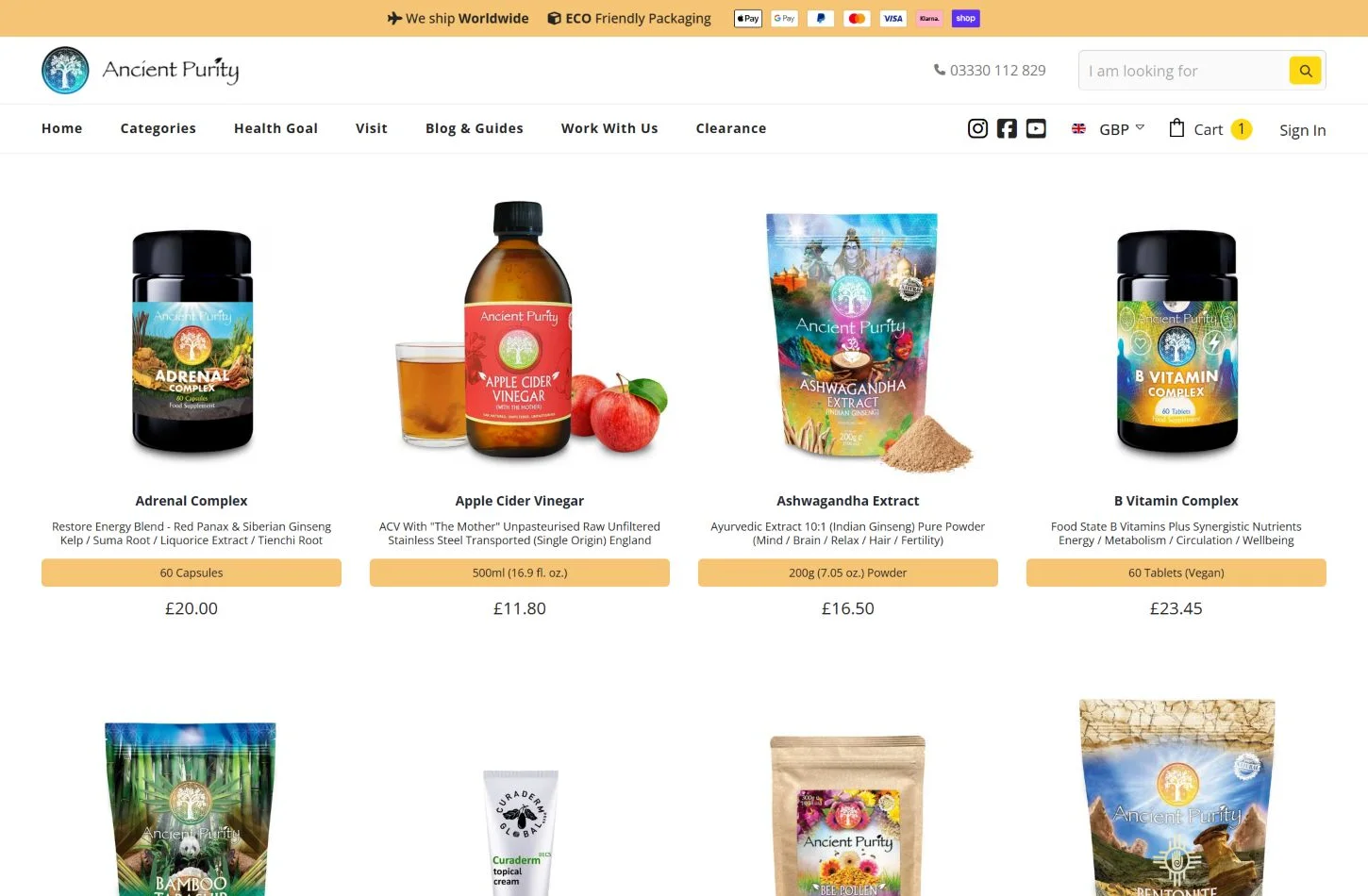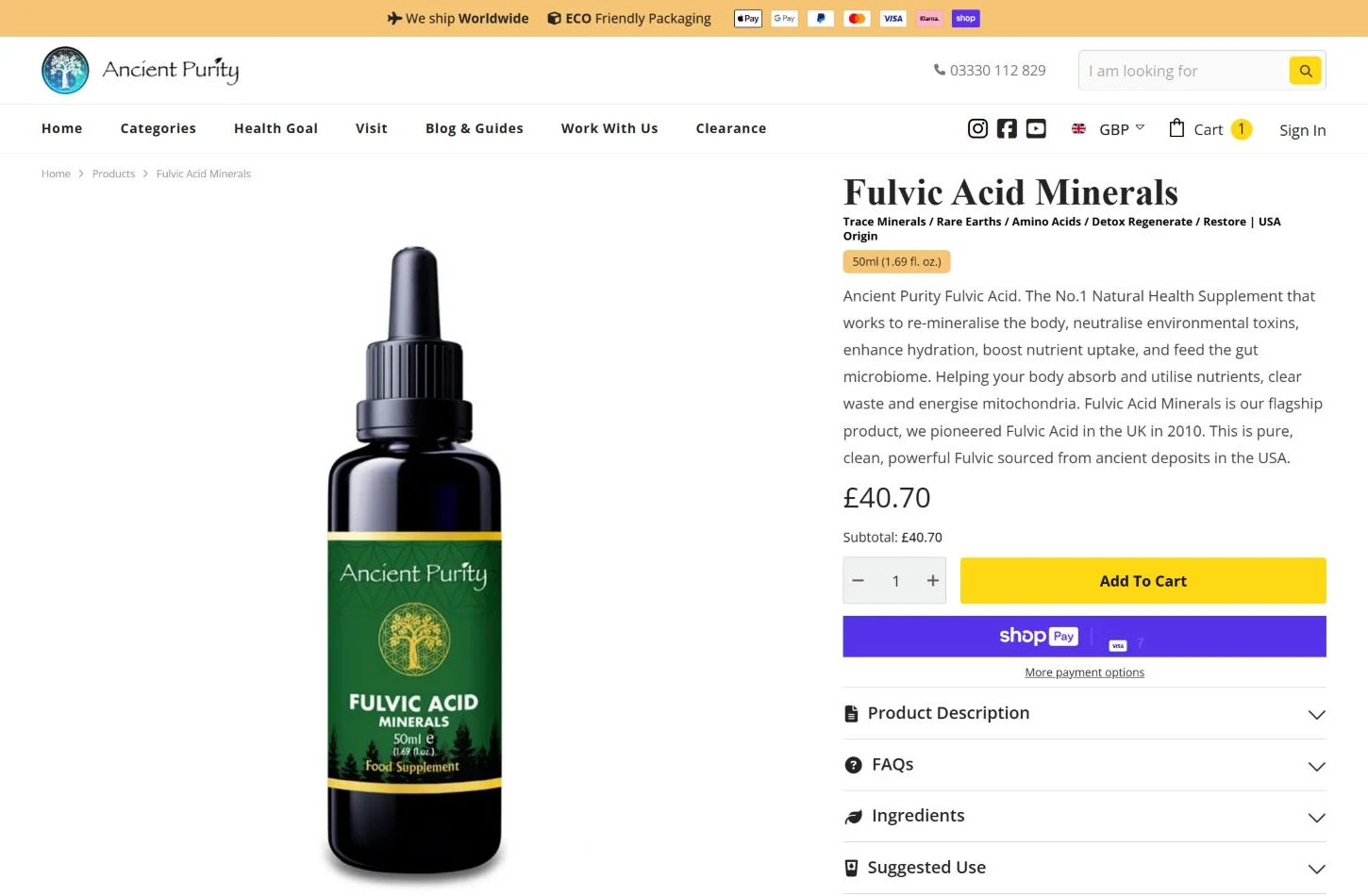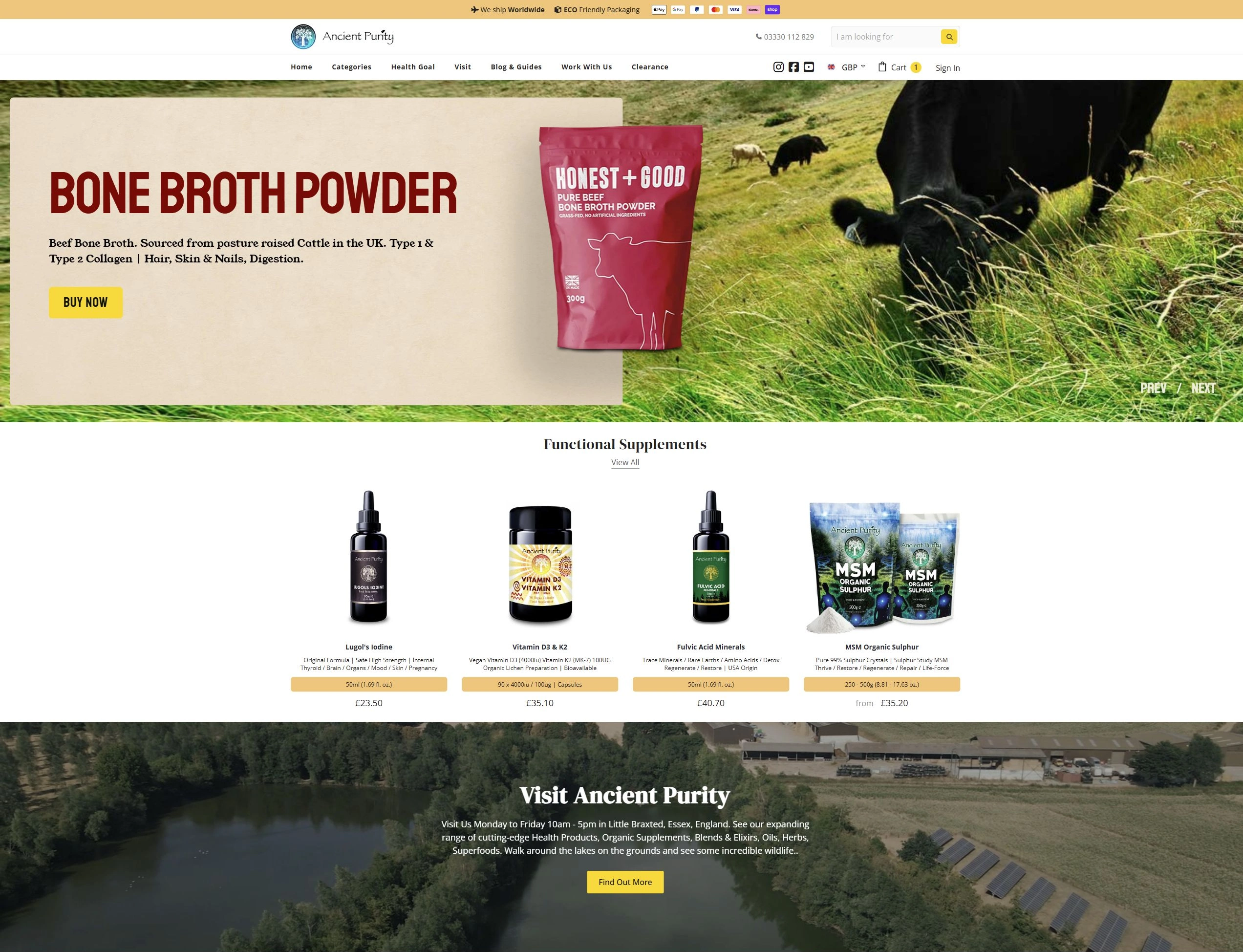
The clearest sign that moving Ancient Purity to Shopify was the right decision wasn’t how the new website looked. It was the customer calls and emails we stopped receiving.
On the old website, people regularly contacted the team because they couldn’t complete their payment. Since moving to Shopify, those recurring checkout complaints have stopped.
For an online shop, that matters more than almost anything else.
A successful shop that became harder to maintain
I started working with Tom and Ancient Purity around 2013, building their original website on Magento 1. For a long time, it worked well. The website performed, sales were strong and we were happy with the platform.
Magento 2 launched in November 2015, and we eventually migrated around 2017.
That was a substantial project. The template system had changed, extensions needed replacing and integrations needed revisiting. In practical terms, much of the website had to be rebuilt.
The newer setup also made the team more dependent on me. Maintenance tasks involving terminal commands, including reindexing and clearing caches, weren’t things Tom and his team could comfortably handle themselves.
The business continued doing well, but looking after the website had become more involved.
The checkout was the biggest concern
Payment problems were coming up weekly, even while hundreds of other payments were completing successfully.
Our payment setup transferred customers to a third-party service. When something went wrong, establishing whether the problem was on our website or with the payment provider could be difficult.
It was frustrating for the customer, frustrating for Tom and frustrating for me.
We also wanted Apple Pay and Google Pay. The gateways we were using didn’t offer them, and finding an alternative provider willing to accept the supplements business had proved difficult.
Meanwhile, Tom and I had both admired Shopify’s checkout. It was clear, straightforward and offered the managed payment experience we wanted.
Upgrade again, or change direction?
Further Magento upgrades brought another substantial development task. We fell behind, and eventually our installed version was no longer supported.
We had to decide whether to invest in another Magento upgrade or move to a different platform.
I considered WooCommerce because I have considerable experience with WordPress and smaller online shops. But Shopify was the clear front runner for this project. Its managed checkout was the deciding feature.
Third-party support for older Magento installations was another possible route. For Ancient Purity, we wanted a system we could rely on without continuing to manage that level of platform maintenance.
Moving the shop in six weeks
Ancient Purity was an established online shop with years of customer and order history to preserve. The migration involved much more than moving the product catalogue.
Using a combination of a Shopify migration app and manual CSV files, I transferred the catalogue, customers, orders and content. I also built the new theme, prepared redirects and configured shipping and payments.
The main migration took around six weeks, with the Shopify shop launching in November 2025. We spent further time improving product content afterwards.
I made the final switch overnight, with less than two hours of downtime. When the team arrived at work the next morning, the new website was up and working. We sent customers a newsletter explaining the change and how the new shop worked. We chose passwordless customer accounts, so there was no need to ask everyone to reset their old passwords.
Shipping required particular care. UK postcode rules, including different rates for the Highlands, needed working through. International shipping remains something we refine, particularly as import-duty arrangements change.
Moving platforms doesn’t remove every operational complication.
What changed for customers and the team
Apple Pay and Google Pay are now available and have proved popular with customers. The shop also now accepts USDC.
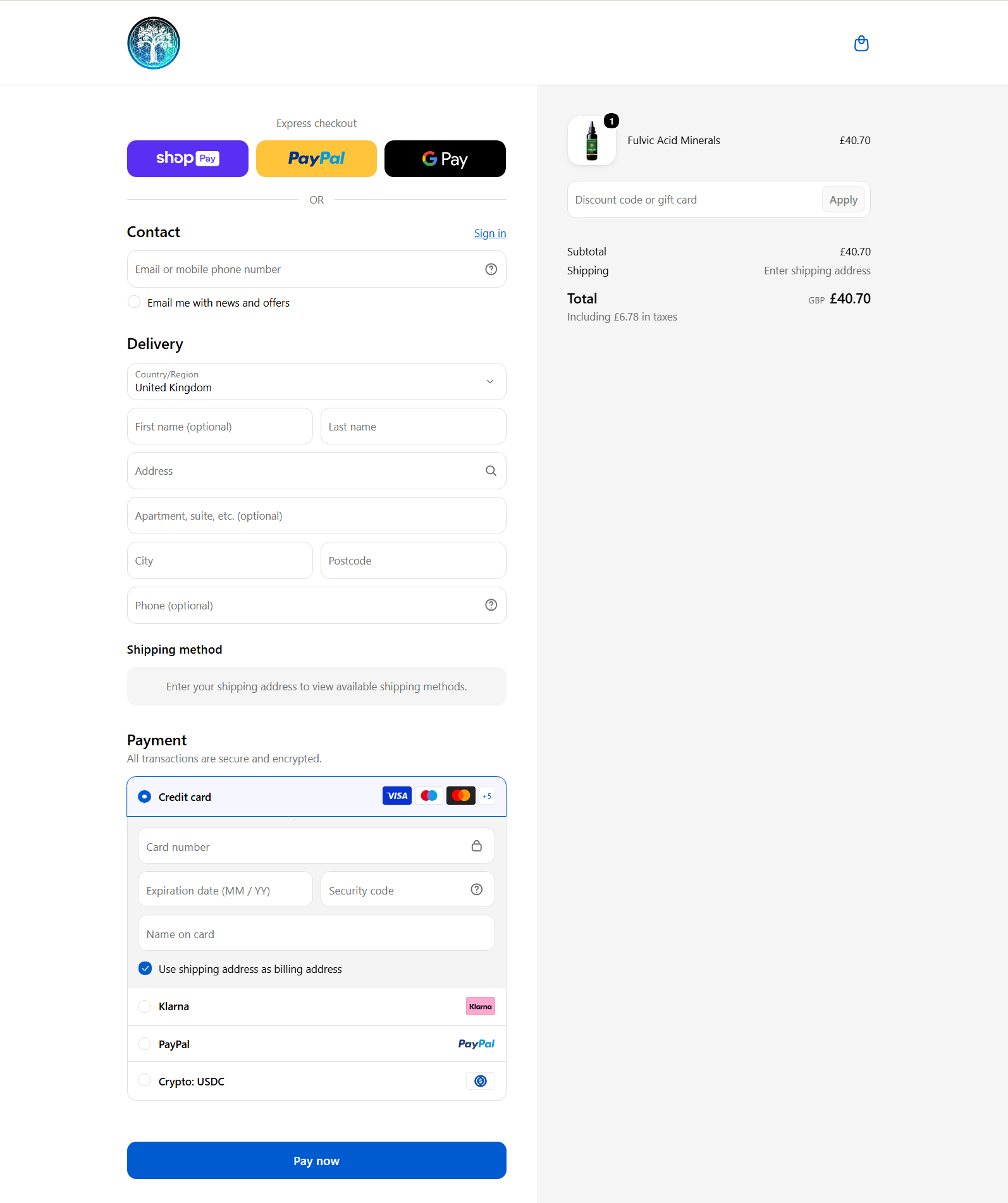
More importantly, the recurring calls and emails about being unable to check out have stopped. Shopify also gives us clearer reporting on checkout performance.
For Tom and the Ancient Purity team, everyday work has become easier. Adding products, managing orders and making changes no longer require the same level of developer involvement. Tasks they previously needed me to handle are now things they can do themselves.
We still use WordPress for the Ancient Purity blog, which I host separately on a subdomain, with navigation connecting it to the shop.